
Water Damage FAQs
Clear answers when water reaches your property.
Find practical answers about emergency response, water sources, extraction, structural drying, sewage cleanup, repairs, insurance billing, commercial losses, and service coverage from Calgary Water Restoration.
Browse by topic
Start with what is happening at your property.
You do not need to diagnose the problem before calling. Use the topics below to understand the first steps, then contact us with the source, affected rooms, property location, and immediate hazards.
Emergency Response FAQs
Know what to do first, when to call, and how response timing works.
What should I do first when water is entering my property?
Keep people away from wet electrical equipment, sewage, unstable ceilings, and standing water near power. Stop the source only when it is safe, then call and describe the source, affected rooms, location, access, and immediate hazards.
How quickly can Calgary Water Restoration respond?
The response target within Calgary is 25 minutes after dispatch. The target outside Calgary is within one hour. Actual arrival timing can change with road and weather conditions, distance, property access, crew availability, and public-safety restrictions.
Are water damage calls answered 24/7?
Yes. Calgary Water Restoration answers water damage calls 24 hours a day, seven days a week. Call rather than waiting for a form response when water is active, contaminated, or creating an electrical or structural concern.
Is it safe to walk through standing water?
Do not enter standing water when electrical wiring, outlets, appliances, equipment, sewage, an unstable ceiling, or structural damage may be involved. Wait for the relevant utility, emergency authority, or qualified responder to confirm safe access.
What information should I have ready when I call?
Share the property address, where the water appears to be coming from, when you noticed it, which rooms are affected, whether the source is stopped, access instructions, and any immediate safety concerns. You do not need to diagnose the full damage.
Water Source FAQs
Water can come from plumbing, appliances, drains, roofs, rain, sewage, and many other sources.
What types of water damage do you handle?
We respond to burst and leaking pipes, appliance failures, overflowing fixtures, sewage backups, sump pump failures, flooded basements, roof leaks, rain and storm entry, sprinkler releases, and other sudden or ongoing water losses.
Why does the water source matter?
The source helps determine contamination risk, safe access, cleaning requirements, material decisions, and disposal controls. A clean supply-line loss is handled differently from sewage, drain water, or outside runoff.
Can water travel beyond the stain or puddle I can see?
Yes. Water can move under flooring, behind baseboards, through wall and ceiling cavities, into insulation, under cabinets, and into adjoining or lower rooms. The visible mark may be only part of the affected area.
What should I do after a burst pipe?
Shut off the water only when it is safe, avoid electrical hazards, protect unaffected areas if possible, and call. Even after the pipe is isolated, water may remain in floors, walls, ceilings, cabinets, insulation, and contents.
Can you help when the source is a roof leak, appliance, or rain entry?
Yes. Restoration can begin with affected-area assessment, water removal, moisture checks, drying, and material decisions. Repairing the roof, appliance, plumbing, drain, or building-envelope source may require a separate qualified trade.
Assessment and Moisture FAQs
Understand how the affected boundary is found and documented before drying decisions are made.
How do you find hidden moisture?
We inspect visible damage, compare material readings, check connected rooms, and follow likely water paths. Moisture meters and thermal imaging can guide the inspection, but some assemblies may still require a controlled opening.
What is moisture mapping?
Moisture mapping records readings by room and material to define the suspected affected boundary. It helps show which areas appear dry, which remain wet, and where drying, monitoring, removal, or further inspection may be needed.
Does thermal imaging prove that a wall is wet?
No. Thermal imaging shows temperature patterns that can guide investigation, but a temperature difference is not proof of moisture. Findings should be compared with material readings and the known loss history.
Does every wet wall or floor need to be opened?
No. The decision depends on the source, contamination, materials, coatings, insulation, saturation, access, and drying progress. We explain what may dry in place and where controlled access or removal is more appropriate.
How do you confirm materials are dry?
We review moisture readings, material condition, and appropriate reference areas against the agreed drying goal. A surface that looks or feels dry is not enough by itself to confirm hidden materials are ready.
Extraction and Structural Drying FAQs
Learn what happens after visible water is removed and why equipment may remain in place.
How is water extraction different from restoration?
Extraction removes accessible standing water. Restoration connects that first step with moisture assessment, structural drying, material decisions, cleaning, documentation, and repair planning.
How long does structural drying take?
Drying time depends on the water source, materials, saturation, affected area, temperature, humidity, airflow, access, and how long the loss went unnoticed. Progress readings determine when equipment can be adjusted or removed.
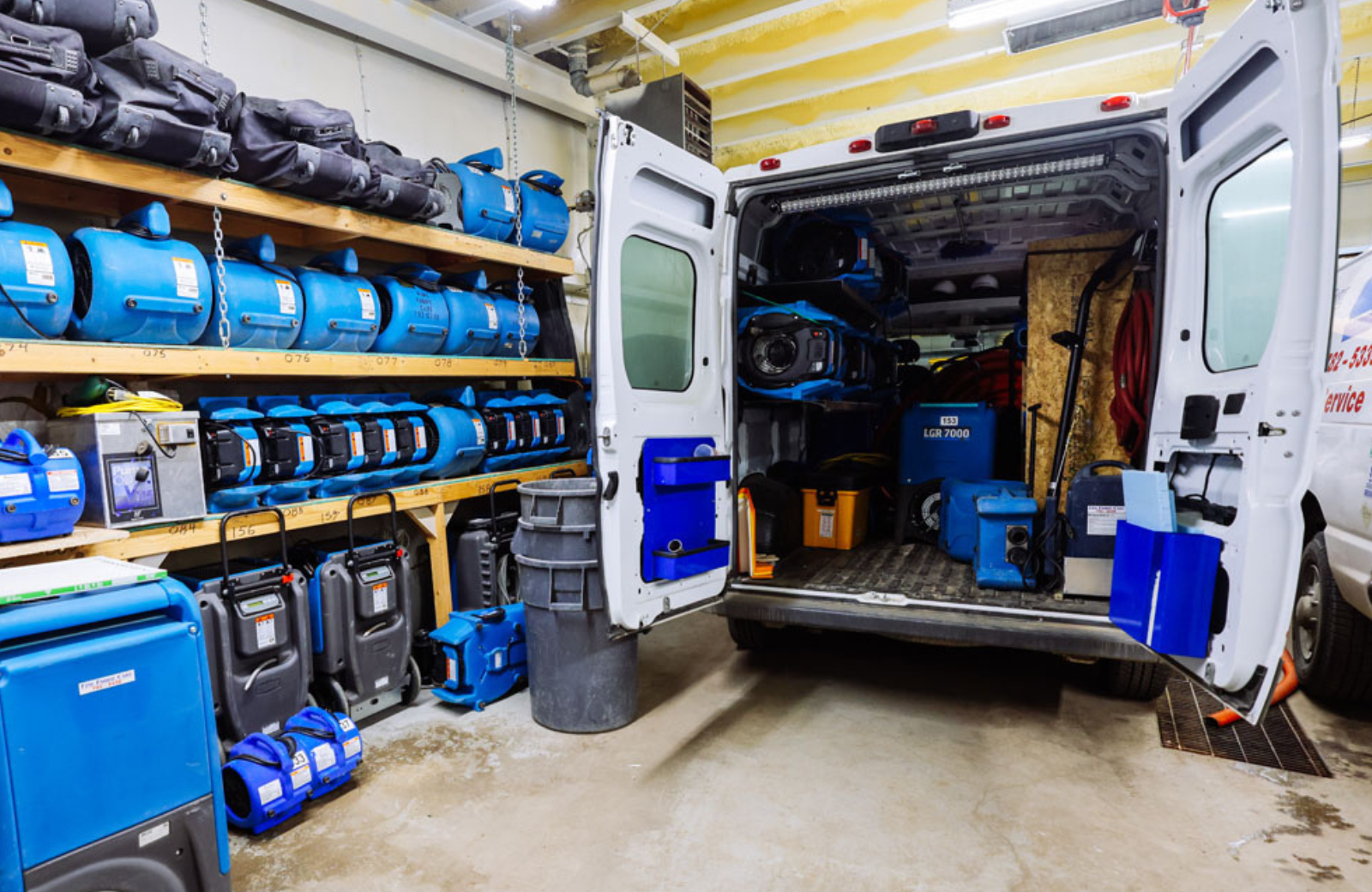
Why do air movers and dehumidifiers need to keep running?
Air movers help moisture leave wet surfaces, while dehumidifiers remove that moisture from the air. Turning equipment off or moving it without approval can slow drying and make the monitoring record less useful.
Can I stay in the property while drying equipment is operating?
Possibly. The answer depends on contamination, electrical and structural safety, equipment placement, heat, noise, access routes, children, pets, and which rooms remain usable. Restricted areas should stay closed.
Is the work finished when visible water is gone?
No. Flooring, walls, insulation, cabinets, subfloors, ceilings, and cavities can remain wet after puddles are removed. Follow-up drying, monitoring, cleaning, selective removal, or repairs may still be required.
Sewage and Contaminated Water FAQs
Protect people and unaffected rooms when sewage or outside water may be involved.
What should I do after a sewage backup?
Keep people and pets out, avoid spreading water through clean rooms, do not use affected plumbing until the source is addressed, and call. Do not handle contaminated porous materials without appropriate protection and a cleanup plan.
Can sewage-soaked carpet, drywall, or insulation be saved?
Porous materials affected by sewage often require removal because contamination can enter areas that cannot be reliably cleaned in place. The exact decision depends on the material, exposure, condition, access, and authorized scope.
Does sewage cleanup include sanitization?
Cleanup may include controlled removal, disposal, cleaning, and application of appropriate products to exposed surfaces. The sequence depends on the source, affected materials, and whether hidden contaminated areas are present.
What happens to belongings exposed to contaminated water?
Items are documented and separated by material, condition, exposure, and value. Some nonporous items may be cleaned, while porous or heavily affected contents may require specialist review or authorized disposal.
When can the affected area be used again?
Use should resume only after the source is controlled, contaminated materials are addressed, cleaning is completed, remaining assemblies meet the drying goal, and any electrical, structural, or public-health restrictions are cleared.
Repairs, Contents, and Mould-Risk FAQs
Understand what may be saved, what may need replacement, and what happens after drying.
Can every wet material be saved?
No. The source, contamination, material type, saturation, physical damage, finish, and time wet all affect whether cleaning and drying are reasonable. We explain the decision material by material.
Does water damage restoration include reconstruction?
The approved scope should state whether repairs or reconstruction are included, authorized separately, referred to another trade, or left for a later decision. Drying and restoration do not automatically include every repair.
How quickly can mould begin after water damage?
Mould risk can increase when moisture remains in suitable materials and conditions. Prompt source control, assessment, water removal, drying, cleaning, and monitoring reduce the opportunity for growth, but timing varies by assembly and environment.
Can you guarantee that mould will not develop?
No responsible restoration contractor can guarantee that mould will never develop in every concealed assembly. The practical goal is to control the source, address affected materials, dry the property, document progress, and investigate new odour or visible growth.
What happens to damaged furniture, documents, or personal contents?
Contents can be documented and separated by condition and priority. Cleaning, drying, specialist recovery, relocation, or disposal depends on the material, contamination, damage, value, and owner or insurer authorization.
Insurance and Billing FAQs
Know how documentation and billing can be coordinated without confusing restoration work with coverage decisions.
Do you work with all insurers?
Yes. Calgary Water Restoration works with all insurers and can coordinate authorized restoration records and scope information. The insurer remains responsible for policy interpretation, coverage, deductibles, limits, and claim approval.
Can you bill my insurer directly?
Yes. When authorized and appropriate for the claim, we can send the restoration invoice directly to the insurer. You can also choose to receive the invoice as the property owner and manage payment or reimbursement yourself.
What documentation can you provide?
Depending on the authorized work, documentation may include affected areas, photographs, moisture readings, equipment or monitoring records, material decisions, work completed, and remaining repair or specialist handoffs.
Does working with my insurer mean the claim is covered?
No. Restoration documentation supports the claim process but does not guarantee coverage or approval. Your insurer decides how the policy applies, including deductibles, limits, exclusions, and authorized amounts.
Should I wait for an adjuster before calling?
Call your insurer when it is safe, but do not delay reporting active water, sewage, electrical concerns, or unstable materials to a restoration provider. Ask what emergency work can be authorized and keep records of the loss and the steps taken.
Commercial Property and Service-Area FAQs
Plan restoration around occupants, business operations, shared buildings, and locations outside Calgary.
What types of properties do you help?
We help homes, condos, apartments, offices, retail spaces, commercial buildings, hospitality properties, multi-unit sites, and other occupied or managed properties affected by water damage.
Can part of a commercial property stay open?
Possibly. The decision depends on the water source, electrical and structural hazards, contamination, access routes, air movement, containment, equipment placement, and activities in adjoining areas.
Can commercial restoration be completed in phases?
Yes, when the hazard and moisture boundaries allow it. The plan can separate urgent stabilization, safe operating areas, drying zones, tenant or staff communication, monitoring, and later repair handoffs.
Which areas do you serve?
Calgary Water Restoration serves Calgary and surrounding communities, including Airdrie, Chestermere, Cochrane, Okotoks, High River, Bragg Creek, Canmore, Banff, and Kananaskis Village, subject to access and current availability.
What is the response target outside Calgary?
The target outside Calgary is within one hour, including Canmore, Banff, and Kananaskis Village. It is a response target, not a guarantee; distance, road and weather conditions, access, crew availability, and public-safety restrictions can affect arrival time.
Still have a water damage question?
Tell us what happened, where the property is located, which rooms are affected, and whether the water is still active. We will help you identify the safest next step.