A burst pipe creates two urgent problems at once. Water is still entering the building, and the water already inside is soaking materials that were never meant to stay wet. Repairing the pipe solves the first problem. Recovering the rooms, finishes and belongings solves the second. A useful response plan connects those jobs instead of treating the plumber's departure as the end of the emergency.
This guide explains the handoff from emergency plumbing to water restoration: what information to gather, which questions to ask, how drying decisions are made and what to check before repairs conceal the affected area. It is intended for homeowners and property managers dealing with a sudden plumbing leak, rather than for anyone attempting a pipe repair themselves.
Begin with people and access, then the water source
Before entering an affected room, look from a safe location for electrical equipment, damaged ceilings, loose flooring and water that may contain sewage. Keep children and pets away. An expanding ceiling bulge, sparking equipment or an unsafe route changes the response from a cleanup task to a safety emergency. Leave the area and contact the appropriate emergency service or utility when the conditions warrant it.
If you know where the water shutoff is and can reach it safely, shutting off the supply may limit further release. Do not search for it through standing water or dismantle unfamiliar equipment. The American Red Cross guidance on household utilities recommends shutting off damaged water pipes at the main valve and calling a plumber. The practical question is whether you have a safe route and know which control you are operating.
At this stage, a short, accurate description helps more than a confident diagnosis. “Water is coming from a line behind the washer and reaching the hallway” tells the dispatcher what is happening. “It is definitely just a hose” may leave out a larger problem. Report what you can see, what has stopped and what remains uncertain.
Arrange plumbing and restoration as connected work
The plumbing contractor needs to identify and repair the failed component, establish whether other connected parts require attention and confirm when the system can be used again. The restoration contractor needs to establish where the released water travelled and what is required to recover affected materials. Depending on the loss, both teams may need access during the same visit.
When an active supply leak requires after-hours repair, a 24/7 emergency plumber can address the plumbing problem while the restoration response is arranged. Give both teams the same contact person and property access information. Ask who will communicate when source control is confirmed; that avoids starting finish repairs around a pipe that has not yet been tested.
There is no need to wait until you understand every wet layer before making the restoration call. Describe the affected rooms, the approximate time the leak was discovered and whether the water is still spreading. A restoration assessment can proceed alongside the plumbing repair, provided the work area is safe and the teams coordinate their activities.
Create a simple incident record while details are fresh
Start a note on your phone or a sheet of paper with the discovery time, the last time the room was known to be dry and the location where water was first noticed. These are different facts. If you discovered the leak at breakfast but the house was empty overnight, record that uncertainty rather than guessing how long the release lasted.
From dry, safe positions, photograph the failed area, the water path and adjoining rooms. Wide photographs show the relationship between spaces; closer images show damaged belongings or finishes. Include the room beneath a leak when it is accessible, and identify each photograph by location. A clear room name is more useful later than a folder of nearly identical close-ups.
Keep the plumber's invoice, repair description and any photographs supplied by the technician with the restoration documents. Ask whether a removed failed component should be retained for the claim file before it is discarded. Your insurer may have specific requests, so contact it promptly and follow its instructions. Documentation supports a review; it does not establish that a particular loss is covered.
Follow the water beyond the visible puddle
A plumbing release does not respect room boundaries. Water may reach a floor edge, pass through an opening around a pipe or collect beneath a finish before it becomes visible elsewhere. The place where you first see a stain may therefore be different from both the source and the full affected area.
During the assessment, ask the restoration team to explain its inspection boundary. Has the room below been checked? Are adjacent cabinets involved? Is the underside of the floor accessible? Is there a shared wall or another unit to consider? These questions help the team connect observations instead of treating a single wet patch as the whole loss.
Calgary Water Restoration offers moisture mapping as part of its water damage services. For a plumbing incident, ask for the locations being monitored and how changes will be recorded. A map or labelled set of readings gives future visits a consistent reference and makes the transition to repair easier to understand.
Separate removal, cleaning and drying decisions
Removing accessible water is only one part of recovery. The team also needs to consider the condition of materials, any contamination concerns and the access required to dry concealed spaces. A clean-looking surface does not answer every question about what happened beneath it.
Ask for a room-by-room explanation of what will remain, what may need to be opened and what cannot be restored. There should be a reason tied to the actual condition of each assembly. For example, a cabinet base may block access to wet material, while a different cabinet may be unaffected. Blanket promises that everything will be saved, or that everything must be replaced, skip the assessment that makes those decisions defensible.
Do not move a suspected sewage loss into the same response category as a supply-line leak. Tell the team if a toilet, drain or wastewater pipe was involved. The water source and the affected materials influence the cleanup plan. Keep traffic away from the area until the contractor has explained the precautions and the route that can be used safely.
Understand what drying equipment is meant to accomplish
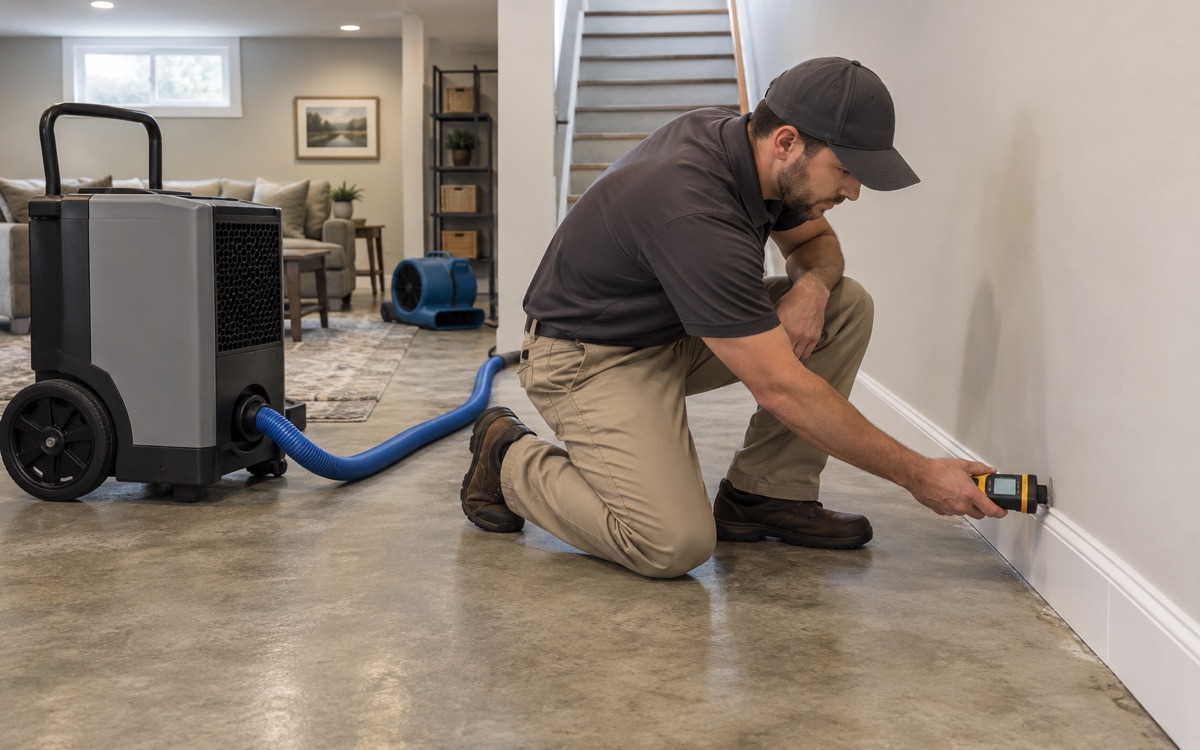
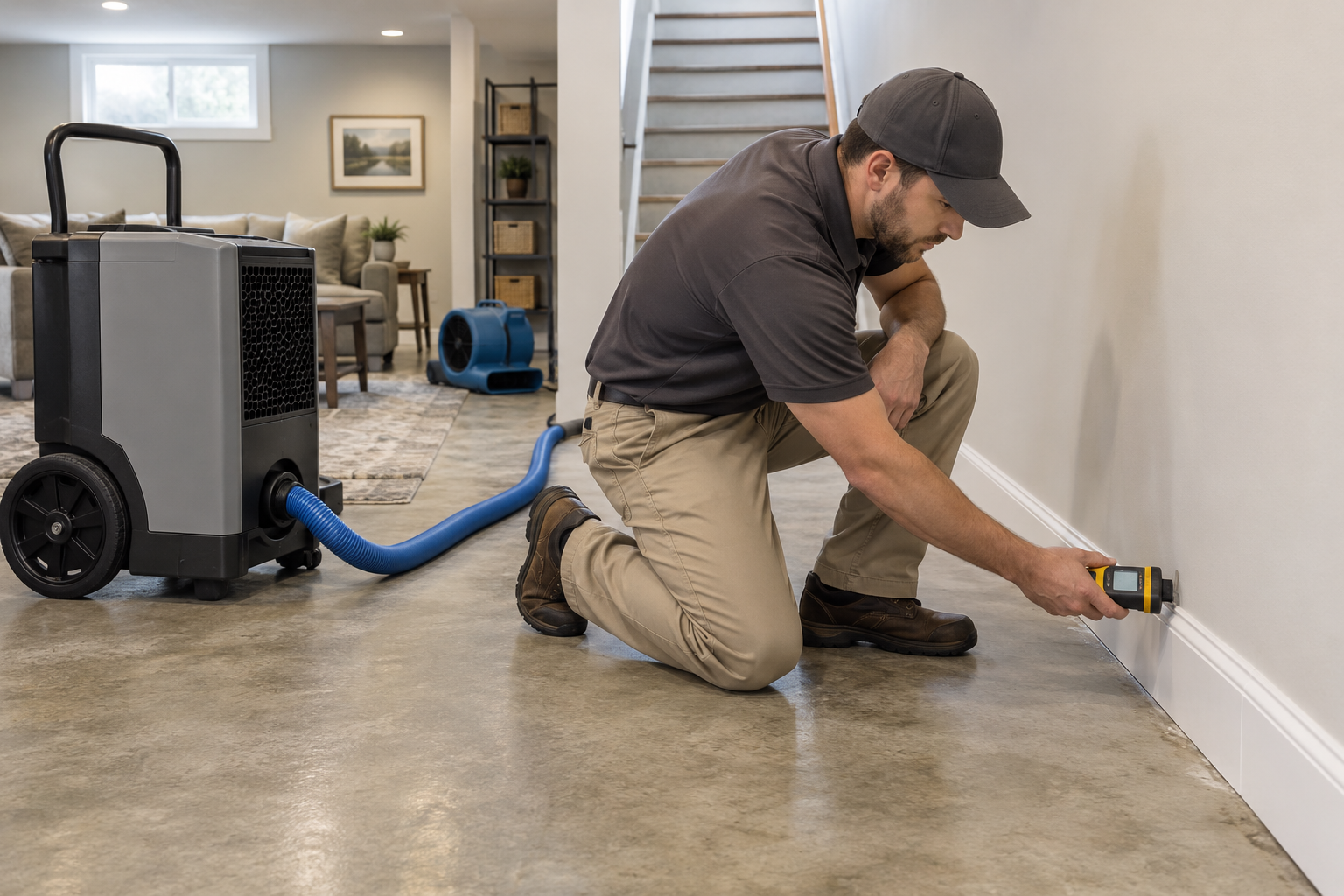
Drying equipment is placed for a purpose, not simply to fill the room with noise. Ask what area each machine serves, which materials are being monitored and how the team will decide whether placement needs to change. If an equipment setup blocks an essential route, discuss it with the technician instead of moving machines yourself.
The EPA's guide to moisture and mould emphasizes prompt drying and correction of the water problem. That supports acting early, but it does not promise that every wall or floor will be dry within a fixed number of hours. The amount of water, construction, access and actual material condition still matter.
Keep the agreed operating instructions visible for everyone in the home. Ask whether doors should remain open or closed, whether any circuits must be reserved and who to contact if a machine stops. A family member trying to quiet the room overnight can interrupt the agreed plan without realizing what the equipment is doing.
Use progress readings to decide the next step
The first equipment visit should establish more than a return date. Ask when the next inspection will happen, which locations will be measured again and what change the team expects to see. This makes the follow-up a review of evidence rather than a conversation based only on how the room feels.
If drying is slower than expected, ask what the team has learned. The answer may involve access to another layer, a continuing source, a different equipment arrangement or a material decision. A revised plan should explain why the change is necessary and which part of the original assessment it updates.
Keep the plumbing repair and the moisture review connected. If new water appears after the repaired fixture is used, tell both teams immediately. Do not assume it is leftover moisture, and do not assume the new observation proves a repair has failed. Record the time and location so the professionals can distinguish a new release from the original affected area.
Plan daily life around the affected space
A water loss can disrupt a household even when only one room is damaged. Make a practical list of what the family needs: access to a bathroom, a safe sleeping area, pet arrangements, medication storage and a route through the home. Share that list with the restoration lead before equipment and barriers are set in place.
For a rental or managed property, use one agreed communication channel. Tell occupants which rooms are restricted, whom to contact about a new leak and when the next visit is expected. Avoid promises about reopening until the contractors have confirmed the conditions. Clear expectations reduce the chance that someone reuses an affected fixture or enters a restricted room.
If belongings must be moved, record where they go and whether they were affected by water. Keep items from the wet area separate from unaffected belongings until the team explains the handling plan. That simple separation makes later cleaning, inventory and return decisions easier.
Do not close the wall before the handoff is complete
The repair stage needs its own checkpoint. Ask whether the plumbing work has been completed and tested, whether drying goals have been met and whether any further inspection is required before the opening is closed. A finish contractor should receive that information rather than infer it from the absence of a puddle.
Collect the final drying record, the plumbing repair description and the agreed reconstruction scope. Confirm who is responsible for each remaining task, including cabinet work, flooring, paint and cleaning. Small unfinished items can become frustrating when everyone assumes another trade owns them.
After the area returns to use, pay attention to recurring stains, odours or renewed dampness and report changes promptly. Keep the incident records somewhere accessible. They can help a future contractor understand which part of the plumbing was repaired and which building materials were affected.
Prepare for the next plumbing emergency while the details are familiar
Once immediate recovery is complete, ask the plumber to show you the appropriate shutoff controls and explain which maintenance items deserve attention. Label the controls clearly if recommended, and keep the property access instructions with the emergency contacts. In a shared building, confirm who is authorized to operate building-level valves.
Review the incident with the household or property team. What delayed the call? Was the shutoff hard to reach? Did anyone lack the manager's number? Addressing those practical gaps is often more useful than buying equipment without a clear response plan.
For water already affecting the building, contact Calgary Water Restoration to discuss assessment, water removal, drying and the restoration handoff. The goal is a complete sequence: control the source, understand the affected area, document recovery and return the space to use with clear responsibilities.