A Dry Surface Can Hide a Wet Assembly
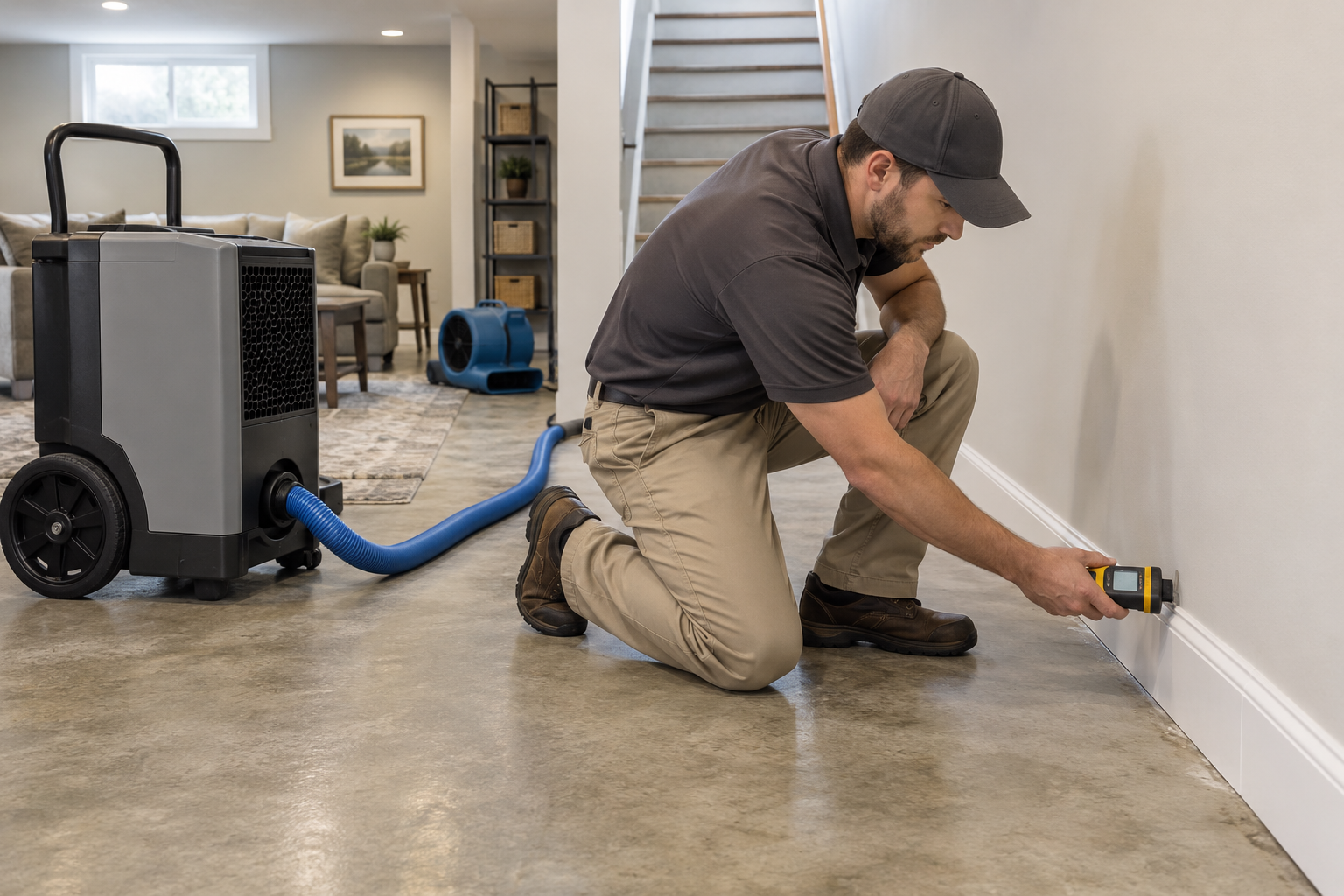
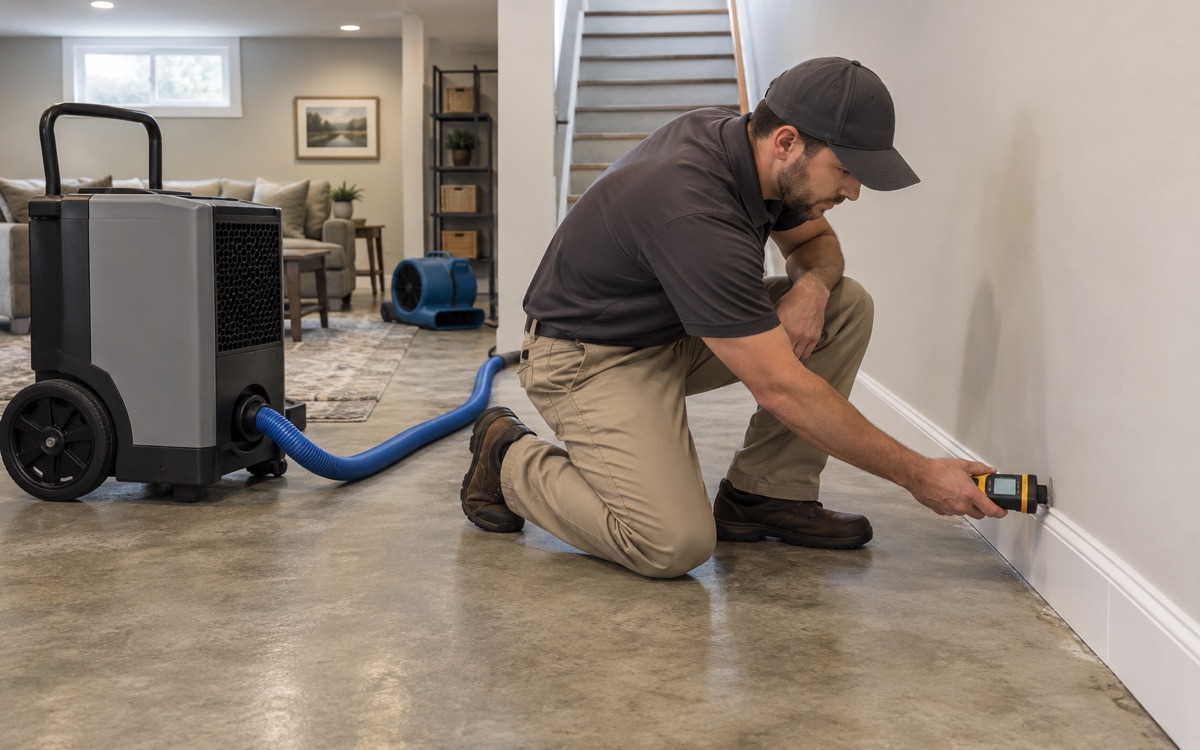
After a leak, a wall or floor can look normal while moisture remains below the finish. Paint, baseboards, flooring, and cabinet panels can limit what you can see. Moisture testing helps a restoration contractor investigate those areas and track whether retained materials are drying. It also gives the repair team a better basis for deciding when an assembly is ready to close.
The useful question is not simply whether a meter was used. It is what was measured, where, with which method, and how the result affects the work. A clear explanation connects readings to practical decisions about access, drying, removal, and reconstruction.
Start With the Water Path
Testing should follow the likely route of the leak. A supply-line failure beneath a sink may affect the cabinet bottom, adjacent wall, flooring seams, and the space below. The first visible wet spot can be some distance from where water entered an assembly. Describe what you observed before cleanup, including dripping, pooling, and changes in nearby rooms.
A room sketch and photographs can help record measurement locations. Repeat checks become more meaningful when the contractor can return to the same areas. If a cabinet, fixed appliance, or floor covering blocks access, record that limitation. An untested area should remain an open question until an appropriate inspection resolves it.
Understand What Different Tools Can Tell You
A moisture meter provides information about the material or area it is designed to evaluate. Meter type, settings, material density, nearby metal, and surface conditions can influence interpretation. Some tools help screen a wider area, while other methods provide more specific checks. Ask the person taking readings to explain their purpose in ordinary terms.
Thermal imaging may help identify temperature patterns that warrant closer investigation. It does not directly show water or prove that a suspicious area is wet. Similarly, a low room-humidity reading does not establish that the centre of a wall assembly is dry. The strongest assessment combines observations with suitable measurements and access where needed.
Use Appropriate Comparisons
A number without context is difficult to interpret. A contractor may compare affected material with a suitable unaffected area or use a target appropriate to the material and proposed work. Different materials should not automatically be judged against the same reading. Drywall, solid wood, and concrete do not behave identically.
Ask how the drying target was chosen and whether the comparison material is reasonably similar. A wood trim reading should not silently become the acceptance target for a concrete slab. Where a flooring manufacturer requires a particular substrate test, arrange that test rather than assume a general restoration reading satisfies the installation specification.
Track Progress Instead of Relying on One Visit
Repeated checks can show whether drying is progressing and where the plan may need adjustment. A single early reading establishes only the condition observed at that time. Later readings help the contractor decide whether to change equipment, improve access, investigate another source, or reconsider a retained material.
Ask for a concise update on the slowest areas. For example, the exposed wall may be improving while the base beneath a cabinet remains elevated. That difference can explain why equipment is still needed even when most of the room looks finished. It also focuses follow-up on the unresolved location rather than repeating broad reassurance.
Keep Material Condition Separate From Moisture
A material can become dry yet remain damaged. Swollen composite board, separated flooring layers, softened drywall, and distorted trim may still require repair or replacement. Contamination is another separate question. Moisture readings help evaluate drying; they do not establish that an item is clean, structurally sound, or suitable for continued use.
Health Canada’s flood-cleanup guidance addresses moisture and affected materials after flooding. An overview of water damage restoration from Edmonton Water Damage Restoration can also help explain how drying fits into the wider repair process. The property-specific assessment should still determine the work.
Agree on the Handover Before Reconstruction
Before finishes are installed, request a clear statement of which materials were checked and which areas are ready for the next trade. Keep any unresolved access limitation or follow-up condition beside that statement. This gives the drywall installer, cabinet contractor, or flooring specialist the information needed to plan their own work.
If a new stain, odour, or wet reading appears during repairs, pause the affected work and investigate. Do not assume an earlier drying result covers a later leak or a previously unopened cavity. Keep the original source repair and any continuing maintenance recommendation in the record so the project closes with both moisture and cause addressed.
Keep the testing record useful for someone who was not present during the visit. Name the room, material, and inspection location rather than recording a number beside an unexplained abbreviation. When readings lead to an access recommendation, include that connection in the update. A future repair contractor should be able to understand what was established without reconstructing the original conversation.
For occupied properties, agree on a reporting contact. New dampness or an interrupted drying setup should reach the person responsible for assessment. A shared message prevents an occupant’s observation from being lost between the source-repair and restoration teams.
Questions to Ask About Moisture Testing
Can I check a wall by touching it?
Touch can identify obvious dampness, but it cannot reliably assess moisture concealed behind finishes. Tell the contractor what feels damp and ask whether further testing or access is needed. Avoid treating a cool or comfortable surface as a complete drying result.
Do I need every reading explained?
You should understand the locations that affect decisions, the drying target, and any areas still unresolved. A useful report connects the technical record to the proposed work. You do not need to interpret every instrument setting yourself to ask for a clear scope.
When can the drying equipment leave?
That decision should follow the assessment of retained materials and the agreed drying criteria. Ask what evidence supports removal and what remains to be repaired. A calendar date or a quieter room alone cannot establish that every affected assembly is ready.