Can Insulation Be Saved After A Roof Leak In Calgary?
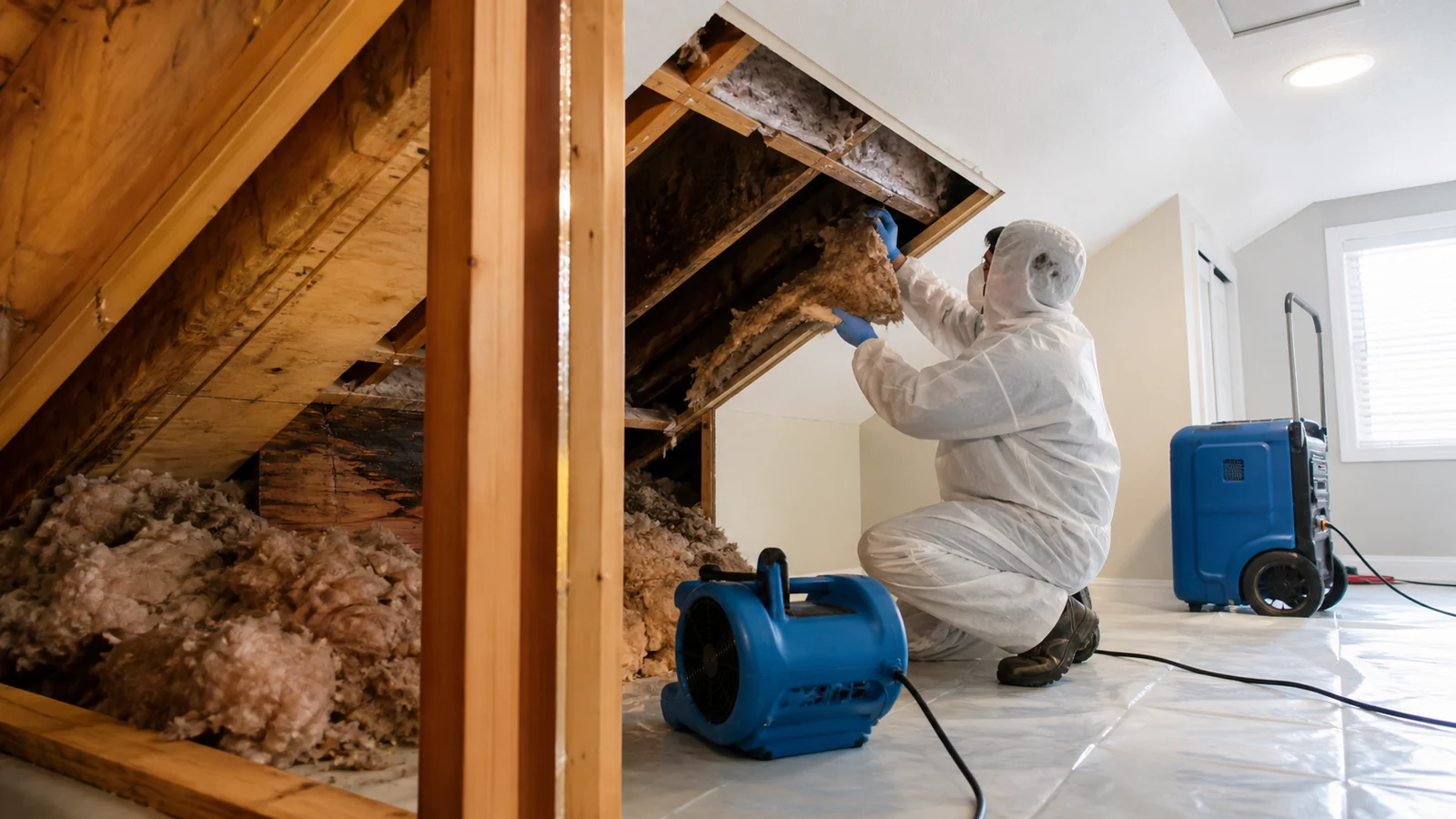
Insulation may be retained only when the source was suitable, the material remains intact and accessible, and drying can be verified. Matted, contaminated, displaced, or enclosed wet insulation often requires removal.
Calgary hail, wind, freeze-thaw cycles, and snow accumulation can damage roof coverings or expose existing defects. Interior staining may appear away from the exterior opening because water can travel along sheathing, framing, insulation, or mechanical penetrations.
This Calgary guide explains the immediate decision, what a restoration team checks, which conditions change the scope, and what records help owners, managers, contractors, and insurers move the file forward.
What To Do Before Restoration Work Begins
Avoid bulging or unstable ceilings, move people away from wet electrical fixtures, and arrange qualified roof source control when conditions permit.
- Protect the area below: Restrict access under unstable finishes and around wet electrical fixtures, then arrange safe source control.
- Open and dry the affected path: Inspect the route, remove authorized damaged material, manage wet insulation, and set measured drying.
- Document the repair handoffs: Confirm interior drying progress and identify roof, electrical, insulation, and finish work still required.
Do not cover, paint, or rebuild an area just because the surface looks dry. Finishes can hide wet insulation, framing, underlay, subfloors, cabinet bases, and connected cavities.
What A Calgary Restoration Team Checks
The assessment should connect the source, water path, affected materials, contamination risk, and safe work boundary. For this question, the review normally includes:
- Whether the area is safe and the leak is stopped: We check ceiling stability, wet electrical fixtures, active water entry, and whether a qualified roofer has controlled the source.
- Where water travelled from the roof: We inspect insulation, framing, ceilings, walls, fixtures, flooring, and rooms below the leak.
- What must be opened, dried, or removed: We explain which wet layers can be dried, which need access, and which damaged materials should be removed.
- Who handles the roof and final repairs: We make it clear when you need a roofer, electrician, insulation contractor, or finish repair after the interior is dry.
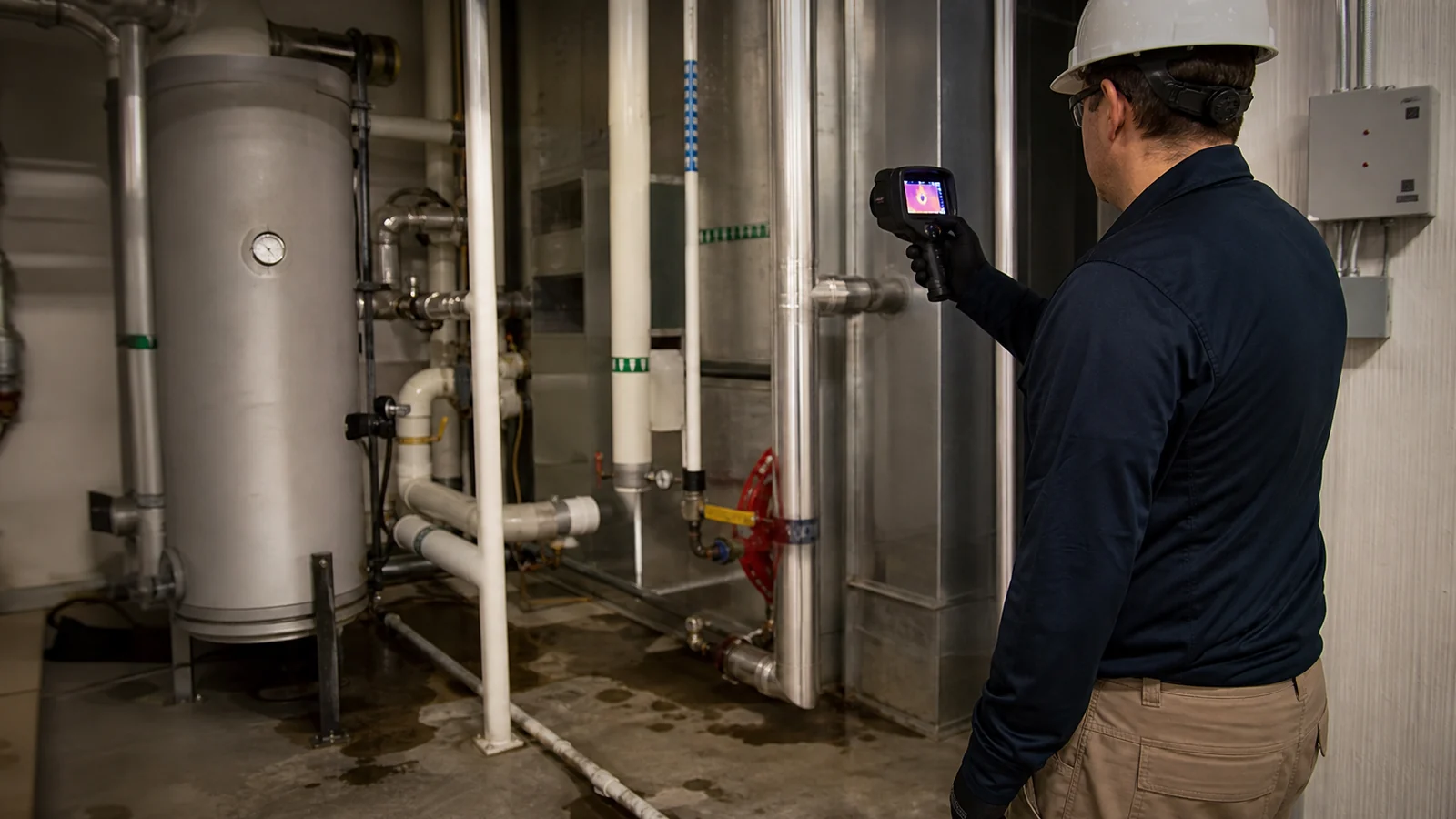
Moisture readings and material condition are more useful than appearance alone. When access is limited, the team should explain what is confirmed, what remains uncertain, and whether a controlled inspection opening or another qualified trade is needed.
What Changes The Restoration Scope
- Roof source and duration: An intermittent or wind-driven leak may affect a wider path than one short plumbing release.
- Ceiling and insulation access: Height, attic access, vapour barriers, insulation type, and unstable finishes affect labour.
- Electrical fixtures: Wet lights, wiring, controls, and equipment require safe isolation and qualified review.
- Number of levels: Water travelling down walls or shafts expands mapping and repair areas.
The written scope should distinguish emergency stabilization, water extraction, drying, cleaning, selective removal, source repair, and reconstruction. These tasks may happen in sequence and may require separate authorization.
Insurance And Documentation In Calgary
Photograph the source when visible, affected rooms, water lines, finishes, contents, and any emergency work. Keep invoices, equipment records, moisture logs, disposal approvals, and communications. Notify the insurer promptly and ask what documentation or authorization it requires.
Calgary Water Restoration works with all insurers and can bill the insurer directly for approved work. Coverage, deductibles, exclusions, approvals, and claim decisions remain policy-specific and are decided by the insurer.
Calgary Services Related To This Question
This topic may connect with Roof Leak Water Damage Restoration, Ceiling & Wall Water Damage Restoration, Moisture Mapping, Structural Drying & Dehumidification, Storm & Rain Water Damage Restoration. The right starting point depends on whether the immediate need is extraction, damage mitigation, moisture investigation, drying, contaminated-water cleanup, or broader restoration.
Common Questions
Do you repair the roof?
This service focuses on interior water damage. Roof repair should be confirmed separately with a qualified provider and listed only if genuinely offered.
Is a ceiling stain the full wet area?
Not necessarily. Insulation, framing, vapour barriers, and wall cavities can spread or hold water beyond visible staining.
Should I puncture a bulging ceiling?
No. Keep people away because water and material can release suddenly, and electrical fixtures or wiring may be involved.
Get Water Damage Help In Calgary
Calgary Water Restoration provides 24/7 response for water removal, moisture assessment, structural drying, cleanup, and restoration planning. For urgent help, call (587) 333-3251 or request a callback. Keep away from standing water, wet electrical equipment, sewage, and unstable ceilings while help is on the way.