How Do Calgary Restoration Companies Find Hidden Moisture?
Calgary restorers use loss history, visual clues, moisture meters, thermal imaging where useful, comparison readings, and selective access. Each method has limits, so results must be interpreted with the building assembly.
Calgary properties include finished basements, multi-unit buildings, older assemblies, newer infill construction, and commercial spaces with different access and drying constraints. The response should follow the actual source, materials, occupancy, and measured moisture boundary rather than a generic room count.
This Calgary guide explains the immediate decision, what a restoration team checks, which conditions change the scope, and what records help owners, managers, contractors, and insurers move the file forward.
What To Do Before Restoration Work Begins
Avoid opening unstable or contaminated assemblies yourself and do not use electrical meters or tools in standing water.
- Review the loss history: Identify the source area, timing, visible changes, repairs already made, and materials that may conceal the water path.
- Collect and compare readings: Inspect in a repeatable pattern, compare materials and reference areas, and mark the suspected affected boundary.
- Translate findings into action: Explain which areas appear unaffected, which need monitoring or drying, and where controlled access may be justified.
Do not cover, paint, or rebuild an area just because the surface looks dry. Finishes can hide wet insulation, framing, underlay, subfloors, cabinet bases, and connected cavities.
What A Calgary Restoration Team Checks
The assessment should connect the source, water path, affected materials, contamination risk, and safe work boundary. For this question, the review normally includes:
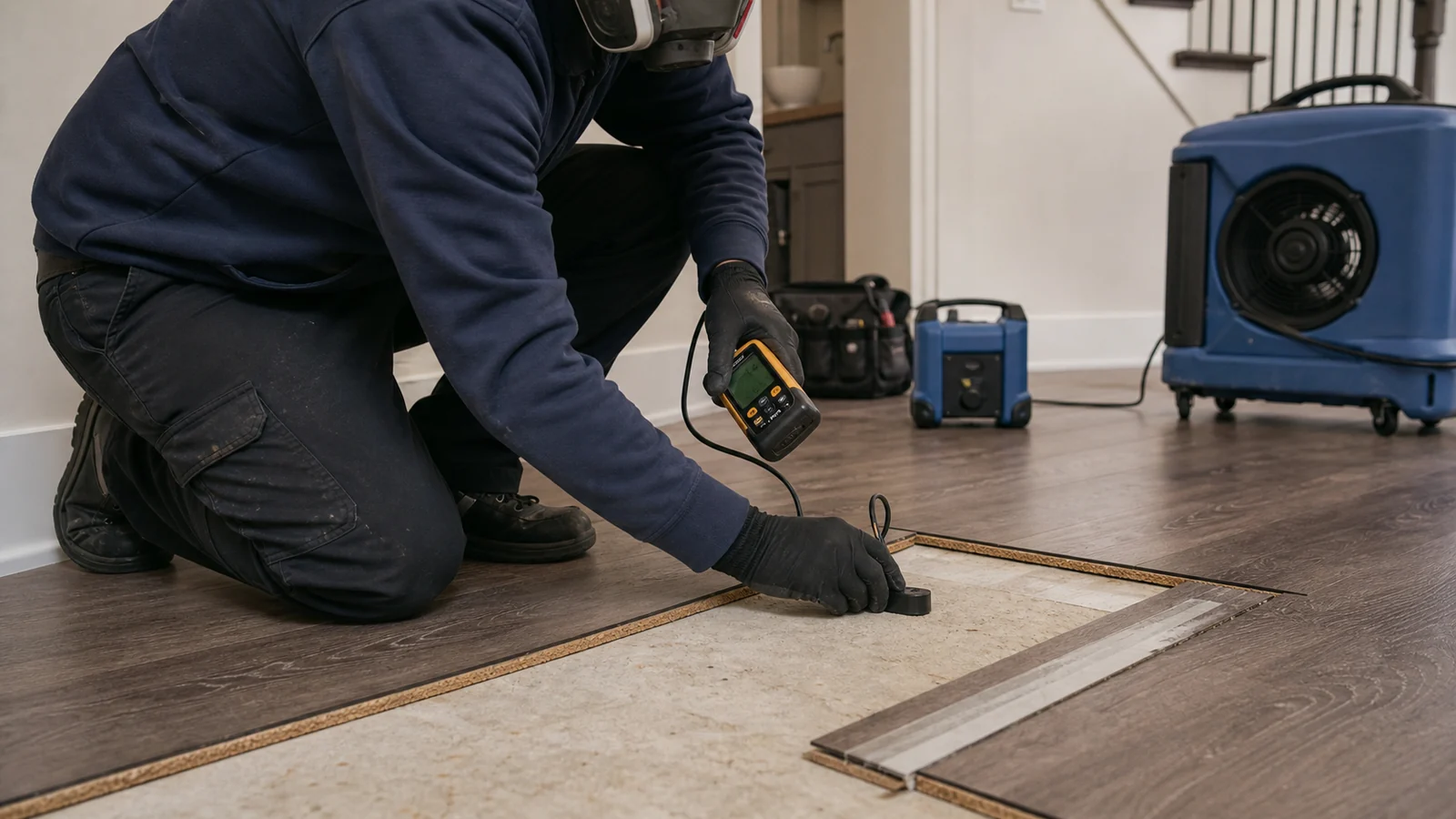
- Where we check for moisture: We take readings in the damaged room, nearby rooms, and known dry areas so you can see where moisture levels change.
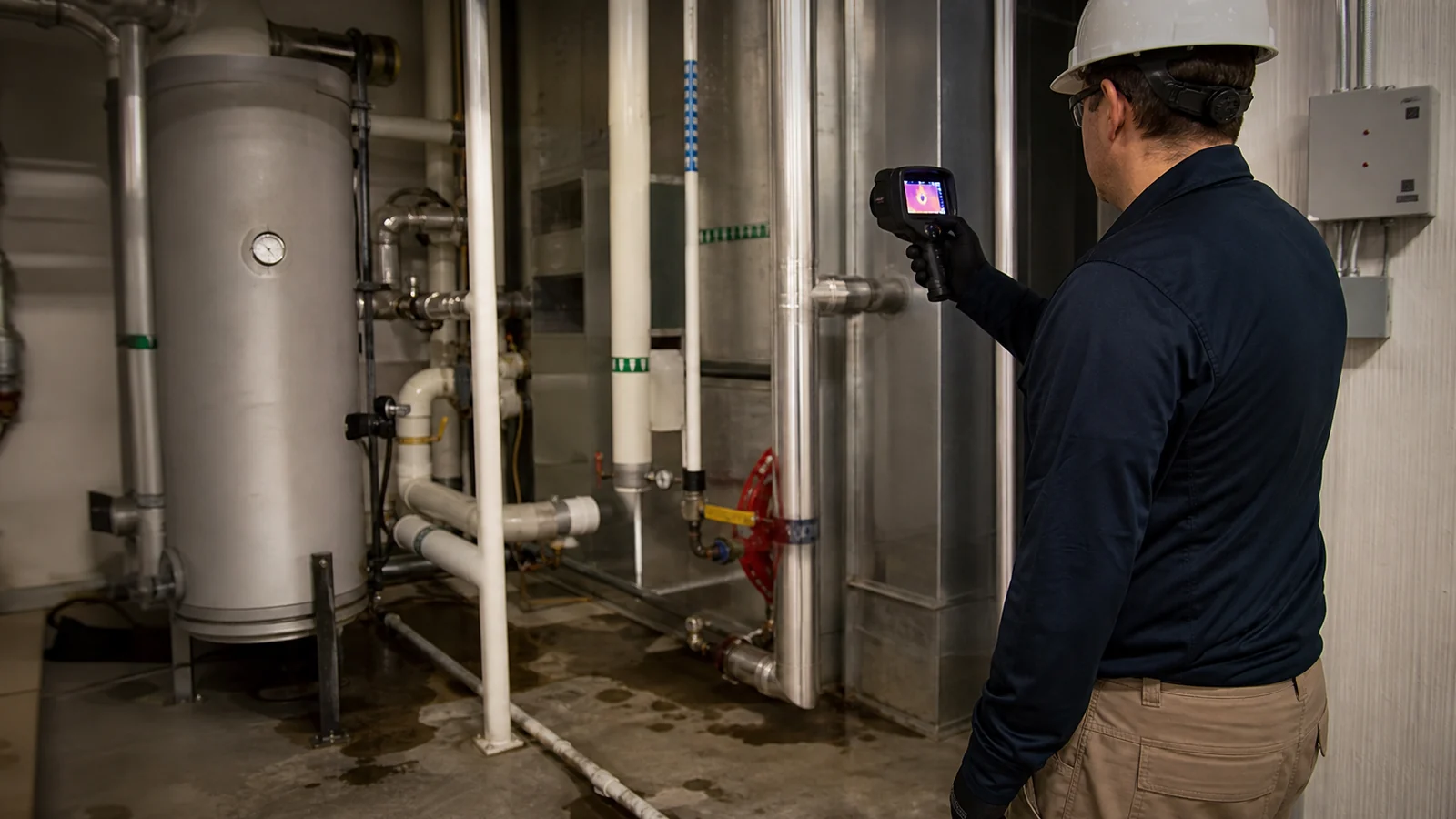
- What our tools can show: Moisture meters and thermal images help us find problem areas, but some walls or floors may still need a small inspection opening.
- How far the moisture travelled: We show you which materials appear dry, which remain wet, and which nearby areas need another check.
- What you receive after the inspection: We provide clear readings, photographs, and next steps so you know whether drying, removal, or another specialist is needed.
Moisture readings and material condition are more useful than appearance alone. When access is limited, the team should explain what is confirmed, what remains uncertain, and whether a controlled inspection opening or another qualified trade is needed.
What Changes The Restoration Scope
- Number of rooms: A larger search area requires more readings, reference points, diagrams, and photographs.
- Assembly complexity: Layered floors, tiled walls, cabinets, shafts, and insulated cavities can require several methods or access points.
- Accessibility: High ceilings, occupied suites, restricted rooms, and fixed contents can limit the inspection grid.
- Monitoring frequency: One assessment differs from repeated readings used to track an active drying project.
The written scope should distinguish emergency stabilization, water extraction, drying, cleaning, selective removal, source repair, and reconstruction. These tasks may happen in sequence and may require separate authorization.
Insurance And Documentation In Calgary
Photograph the source when visible, affected rooms, water lines, finishes, contents, and any emergency work. Keep invoices, equipment records, moisture logs, disposal approvals, and communications. Notify the insurer promptly and ask what documentation or authorization it requires.
Calgary Water Restoration works with all insurers and can bill the insurer directly for approved work. Coverage, deductibles, exclusions, approvals, and claim decisions remain policy-specific and are decided by the insurer.
Calgary Services Related To This Question
This topic may connect with Moisture Mapping, Structural Drying & Dehumidification, Water Damage Remediation, Water Damage Restoration, Ceiling & Wall Water Damage Restoration. The right starting point depends on whether the immediate need is extraction, damage mitigation, moisture investigation, drying, contaminated-water cleanup, or broader restoration.
Common Questions
Can a moisture meter see through every wall?
No. Tools indicate conditions in or near selected materials; metal, tile, depth, insulation, and construction layers can limit interpretation.
Is thermal imaging the same as moisture testing?
No. Thermal patterns can guide investigation, but temperature differences are not proof of moisture and should be checked with other methods.
Will mapping find the leak source?
It can show a moisture pattern that supports source investigation, but plumbing, roof, envelope, or drain testing may be separate.
Get Water Damage Help In Calgary
Calgary Water Restoration provides 24/7 response for water removal, moisture assessment, structural drying, cleanup, and restoration planning. For urgent help, call (587) 333-3251 or request a callback. Keep away from standing water, wet electrical equipment, sewage, and unstable ceilings while help is on the way.