Why Is Water Coming Through My Basement Floor In Calgary?
Water at the basement floor may come from a drain, plumbing line, sump pit, wall-floor joint, slab opening, or hydrostatic pressure. Source diagnosis should come before finishes are replaced.
Calgary properties include finished basements, multi-unit buildings, older assemblies, newer infill construction, and commercial spaces with different access and drying constraints. The response should follow the actual source, materials, occupancy, and measured moisture boundary rather than a generic room count.
This Calgary guide explains the immediate decision, what a restoration team checks, which conditions change the scope, and what records help owners, managers, contractors, and insurers move the file forward.
What To Do Before Restoration Work Begins
Keep clear of electrical and sewage hazards, control active plumbing when safe, and document the entry point during wet conditions if possible.
- Observe and verify the entry: Review wet-weather evidence, interior and exterior conditions, and alternative sources before choosing the repair.
- Complete the focused correction: Open the agreed area, prepare the defect, install the specified repair, and protect adjoining materials.
- Check the assembly and restore access: Document the completed repair, dry affected materials, and identify finish work or monitoring that remains.
Do not cover, paint, or rebuild an area just because the surface looks dry. Finishes can hide wet insulation, framing, underlay, subfloors, cabinet bases, and connected cavities.
What A Calgary Restoration Team Checks
The assessment should connect the source, water path, affected materials, contamination risk, and safe work boundary. For this question, the review normally includes:
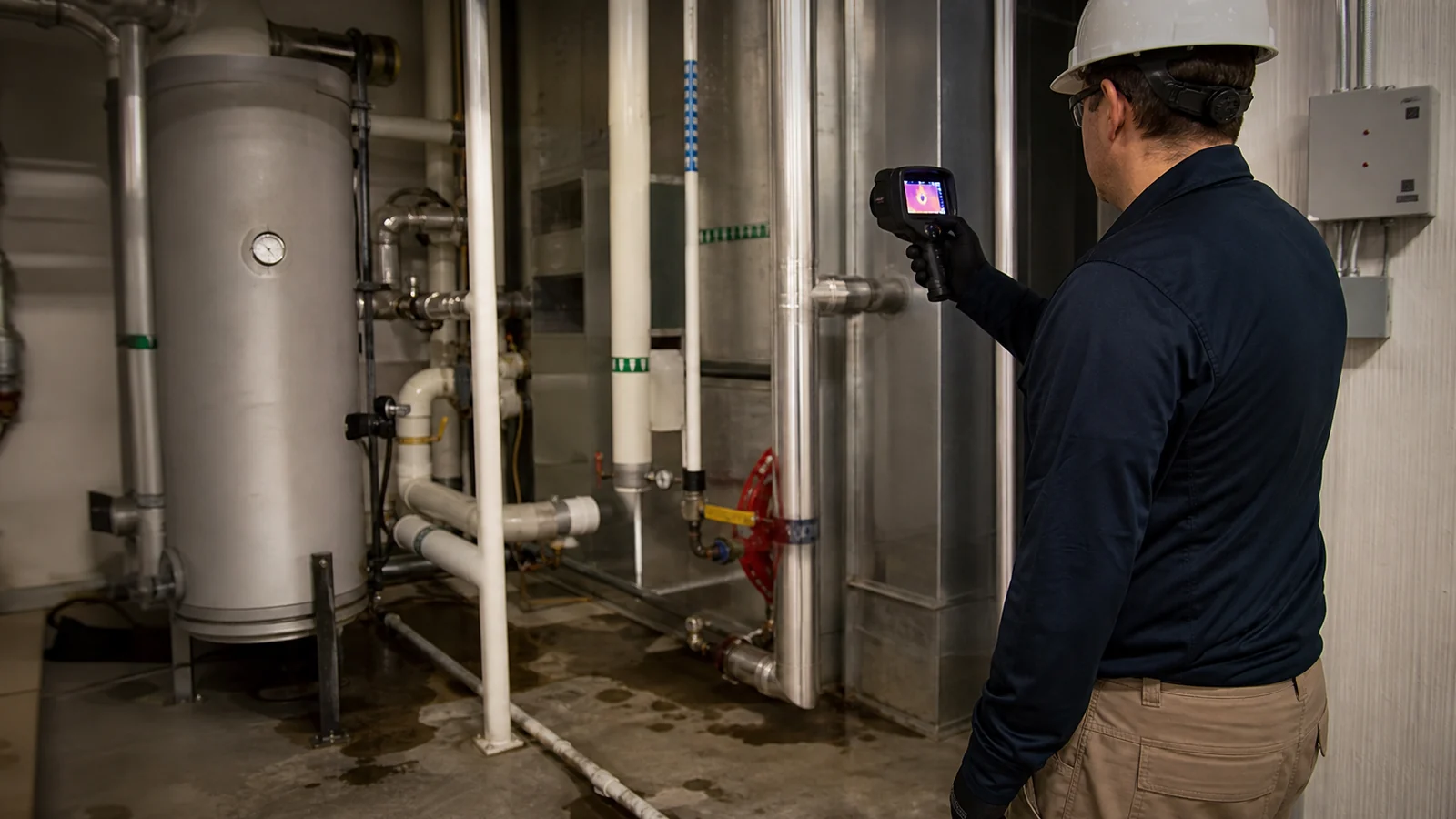
- How we confirm the leak source: We compare when the water appears with the indoor path, outdoor conditions, plumbing, drains, cracks, and joints before choosing a repair.
- What the repair will address: We explain the defect being repaired, the material or component used, the access required, and any unrelated sources it will not fix.
- Other drainage problems to correct: We point out grading, downspouts, window wells, drains, plumbing, or sump problems that may also direct water toward the basement.
- Interior cleanup and repair needs: We show you which finishes need cleaning, drying, removal, or replacement after the leak itself is repaired.
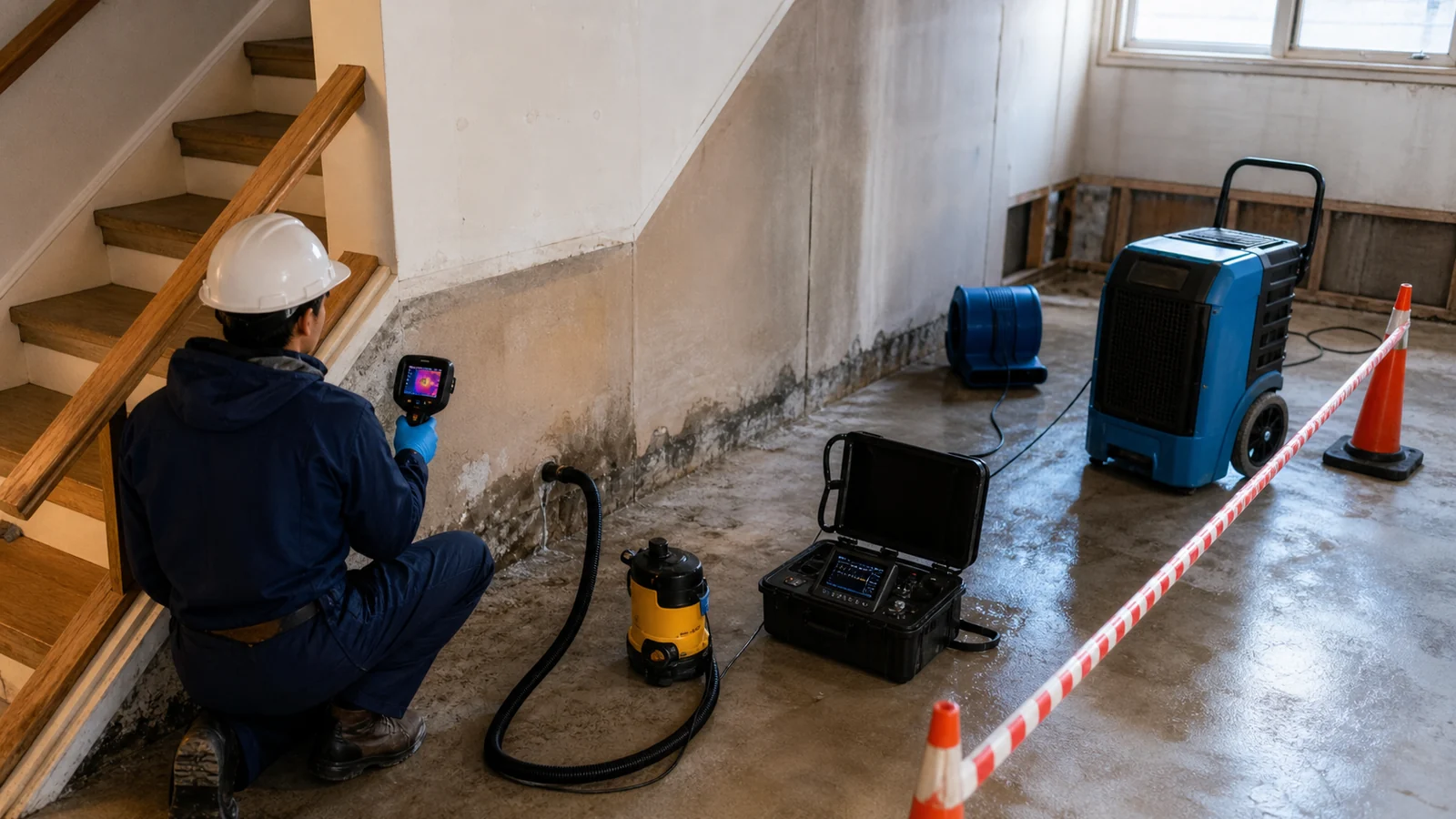
Moisture readings and material condition are more useful than appearance alone. When access is limited, the team should explain what is confirmed, what remains uncertain, and whether a controlled inspection opening or another qualified trade is needed.
What Changes The Restoration Scope
- Source type: Cracks, joints, windows, penetrations, plumbing, and drains require different repair methods.
- Interior or exterior access: Finished walls, excavation, decks, concrete, utilities, and neighbouring property can affect the route.
- Foundation construction: Concrete, block, slab joints, membranes, and prior repairs change preparation and compatibility.
- Drainage corrections: Wells, downspouts, grading, sump connections, and discharge may be separate contributing items.
The written scope should distinguish emergency stabilization, water extraction, drying, cleaning, selective removal, source repair, and reconstruction. These tasks may happen in sequence and may require separate authorization.
Insurance And Documentation In Calgary
Photograph the source when visible, affected rooms, water lines, finishes, contents, and any emergency work. Keep invoices, equipment records, moisture logs, disposal approvals, and communications. Notify the insurer promptly and ask what documentation or authorization it requires.
Calgary Water Restoration works with all insurers and can bill the insurer directly for approved work. Coverage, deductibles, exclusions, approvals, and claim decisions remain policy-specific and are decided by the insurer.
Calgary Services Related To This Question
This topic may connect with Basement Leak Repair, Waterproofing, Flooded Basement Cleanup, Sump Pump Installation, Sump Pump Failure Cleanup. The right starting point depends on whether the immediate need is extraction, damage mitigation, moisture investigation, drying, contaminated-water cleanup, or broader restoration.
Common Questions
How do you confirm where a basement leak starts?
Timing, water pattern, exterior conditions, plumbing checks, cracks, joints, drains, and controlled testing help distinguish likely sources.
Can every basement leak be repaired from inside?
No. The entry path, foundation, drainage, pressure, access, and desired result determine whether interior or exterior work is reasonable.
Is crack repair the same as waterproofing?
A crack repair addresses a defined defect. Waterproofing may involve a broader membrane, drainage, sump, grading, or foundation system.
Get Water Damage Help In Calgary
Calgary Water Restoration provides 24/7 response for water removal, moisture assessment, structural drying, cleanup, and restoration planning. For urgent help, call (587) 333-3251 or request a callback. Keep away from standing water, wet electrical equipment, sewage, and unstable ceilings while help is on the way.